Introducing goal-based campaigns
Overview
Etsy Ads struggled to improve relevance and reduce impression gaps because advertisers, especially advanced sellers, were hesitant to increase budgets without more control over their campaigns. I led mixed-methods research to uncover the true motivations behind requests for ad controls and identify which levers would meaningfully increase trust and investment. These insights directly shaped the launch of goal-based campaign strategies now used by high-budget advertisers.
Timeline
Jul '24 - Aug '24
Partners
Product, Design, Analytics, Eng, Marketing and Legal
Methods
MaxDiff analysis, 1:1 interviews
Challenge
Etsy aimed to increase GMS by improving ad relevance and filling impression gaps, but advertiser behavior was limiting system performance. Advanced sellers were holding back budget without more control, while newer sellers doubted the ROI of Etsy Ads. Internally, ML and product teams were resistant to building controls due to concerns about misuse, revenue impact, and added complexity. This created a strategic impasse: advertiser demand for controls was high, but the team lacked clarity on why these controls mattered and which controls could be safely introduced. Research was needed to ground decision-making before the roadmap could move forward.
Learning objectives
Understand why advertisers were requesting more ad controls.
Identify the underlying motivations behind their desire for agency.
Determine which control types (if any) sellers would actually use and value.
Quantitatively prioritize controls based on impact to trust and willingness to increase budgets.
Research approach
Question-storm with stakeholders
Gather questions and concerns around what a future state with ad controls would look like
Hypothesis generation
In-depth interviews with sellers to learn their performance expectations from our ad product
Feature prioritization
MaxDiff survey to size and prioritize controls across different seller profiles
Key Learnings
Ownership outperforms strategy
Through interviews, we learnt that sellers' control asks were greatly influenced by item category and growth strategy but maintaining a good ROI was a critical underlying motive across the group. At the core, sellers wanted the ability to choose the right course of action for their shop and listing strategy as they did not completely trust Etsy to know what's best for them.
ROI is priority
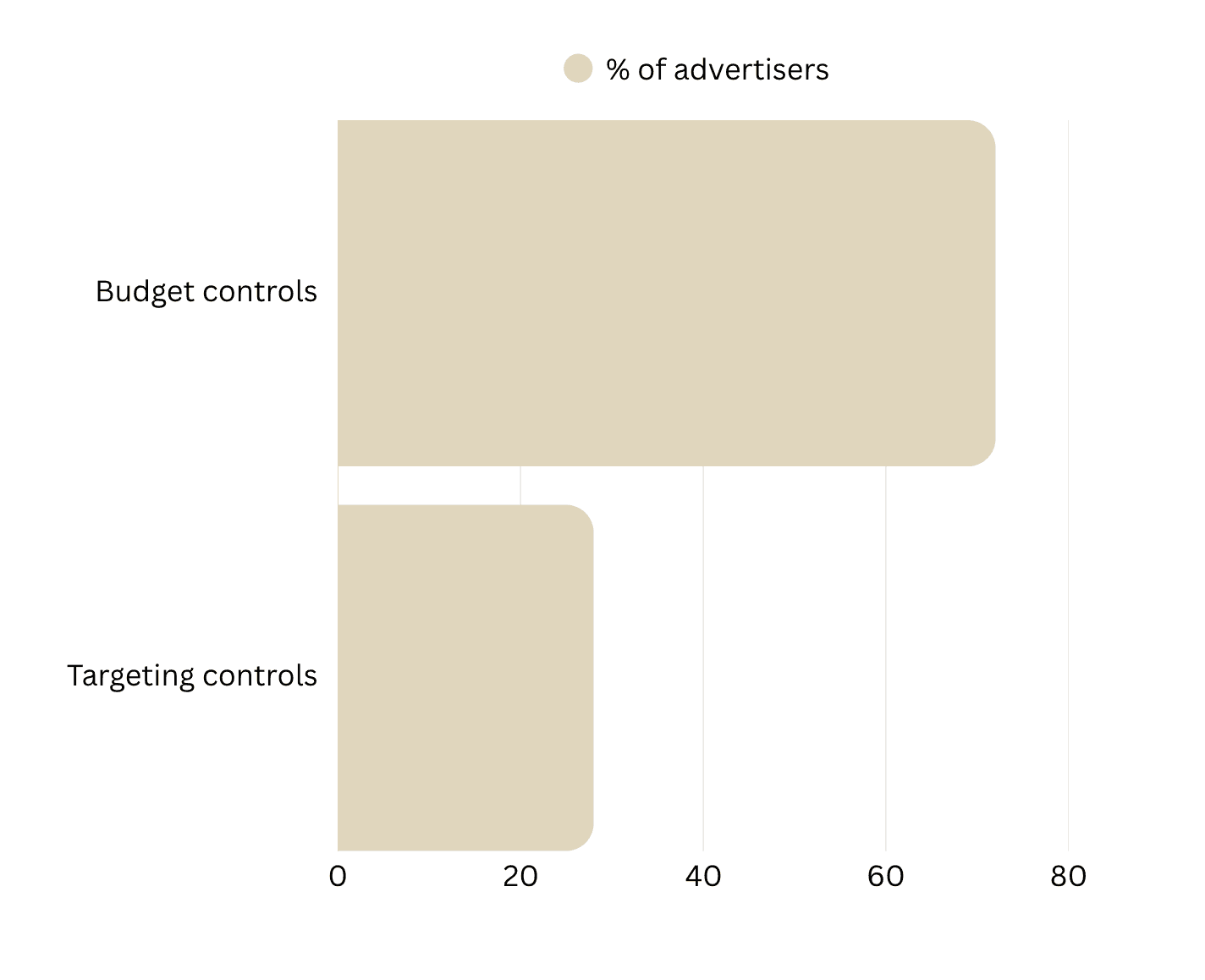
The MaxDiff analysis further confirmed the strong underlying need of maintaining a desired level of ROAS and revealed that budget controls consistently ranked as the top priority for sellers across all segments, above creative or targeting controls. With Etsy Ads taking a one size fits all approach, all sellers tenured or new, reported this strong preference for budget controls that helped control their ROAS level.
“It could be argued that if most of your budget is going towards one high-performing listing, then that listing is a successful advertisement for your shop. Shoppers see that item and it draws them in – your ad is working and doing its job. On the other hand though, this is not how some of us WANT to use our ad budget." - Anonymous participant
Impact
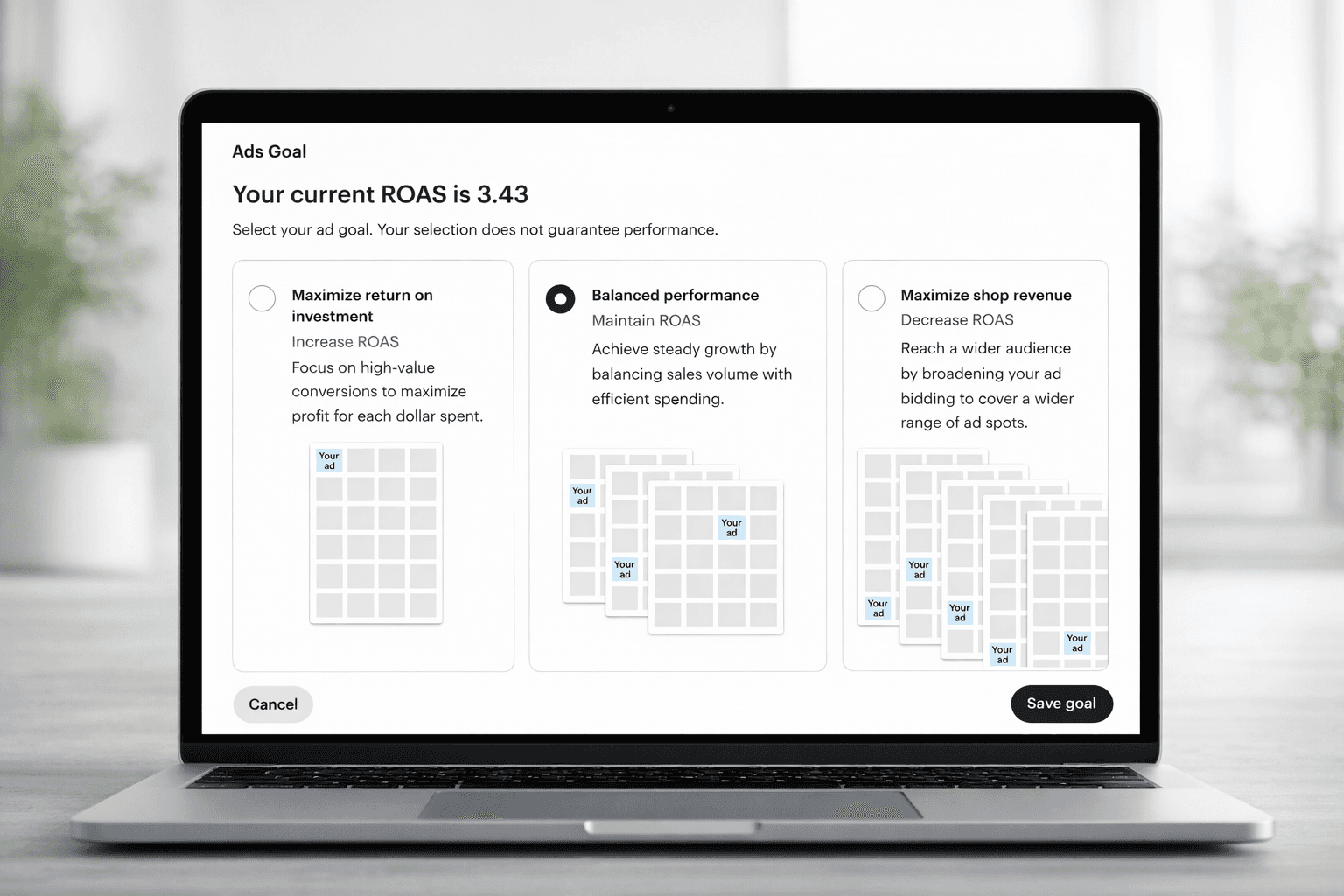
The research unlocked a path forward for a previously stalled roadmap by clearly explaining seller motivations and quantifying which controls mattered most. Insights directly led to the creation of goal-based campaign strategies, enabling sellers to choose between visibility-focused or efficiency-focused goals while maintaining platform safeguards.
(01)
Campaign strategies drove desired outcomes
Sellers who desired more ROAS from campaigns were able to see a measurable increase and sellers who cared more about being visible were able to see a significant increase in their orders/impressions
(02)
Higher budget sellers were especially successful
This was a critical win, unlocking previously untapped spend from high-budget advertisers and giving us the confidence and strategic foundation to encourage broader budget increases across the seller base.